Pest Control in Asheville, NC
Asheville sits in the Blue Ridge Mountains, where warm, wet summers and mild winters keep pests active for much of the year. Subterranean termites work the soil under older homes, mosquitoes breed in standing water after the regular mountain rain, and fire ants, carpenter ants and palmetto bugs follow the same seasonal pattern street after street. Asheville Pest Control Pros connects you with an independent local provider who inspects first, names the pest, and sets out a plan for your address.
Arrange an inspection
Mon-Fri 7:00 AM-10:00 PM ET | Sat 8:00 AM-10:00 PM ET | Sun 7:00 AM-9:00 PM ET
Call NowInspection first
Every visit starts with a look at the property, not a guess over the phone.
Local routes
Providers work Asheville, Buncombe County and the towns around it every week.
Clear plan
You hear the scope, the schedule and what is included before work starts.
Seasonal timing
Treatments are timed to the mountain pest calendar, not to a fixed date.
Pest control that starts with the house, not the spray
Most Asheville pest problems start with the house itself. About 37% of homes in the Asheville metro were built before 1980, and older framing means more gaps, more settled joints and more hidden voids for pests to travel through. A provider who inspects the foundation, the crawl space, the attic and the door thresholds usually finds the entry point in the first visit — and the entry point is what the visit is really for.
That is why the first step here is always an inspection. You describe what you have seen — ants in the kitchen, a nest under the eaves, scratching in the attic — and the provider comes to look. The inspection produces evidence: photographs of the entry point, the mud tube or the droppings identified to species, and moisture readings where wood is suspect.
- Foundation, crawl space and attic checked on the first visit
- Entry points mapped before any treatment is planned
- Moisture readings where wood looks suspect
- A written plan with scope and schedule
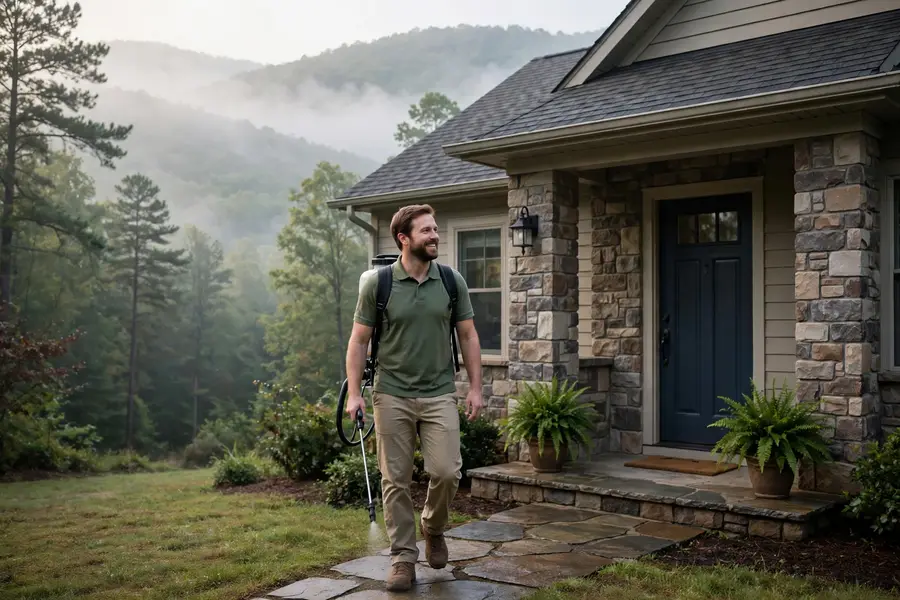
Pest control services in Asheville
Eleven services, one call. Pick the problem and read how the work is done.
Ant Control
Carpenter ants and fire ants in Asheville homes and yards
Termite Control
Subterranean termite treatment and monitoring for Asheville homes
Spider Control
Common house spiders and web removal across Asheville
Cockroach Control
American cockroaches and palmetto bugs in Asheville homes
Mosquito Control
Yard mosquito reduction for Asheville patios and gardens
Rodent Control
House mice and attic rodents in Asheville homes
Flea & Tick Control
Flea and tick yard treatments for Asheville homes with pets
General Pest Control
Seasonal pest protection for Asheville homes
Vacation Rental Pest Control
Pest care for Asheville cabins, condos and short-term rentals
Termite Inspection
WDIR-100 wood destroying insect reports for Asheville home sales
Pest Inspection
Full home pest inspections for Asheville buyers and owners
Why Asheville homeowners call
Four things the local providers are set up to do well.
Mountain pest calendar
Spring termite swarms, summer mosquitoes and fire ants, autumn rodents moving indoors, winter attic work. The schedule follows the seasons.
Older homes, understood
Pre-1980 framing, crawl spaces and stone foundations are the norm here, and the inspection reads them for what they are.
Vacation rentals covered
Asheville has a large short-term rental market. Turnover cleans and between-guest checks are part of the service for cabins and condos.
Termite paperwork handled
Home sales in North Carolina often need a WDIR-100 wood destroying insect report. Inspections for buyers and sellers are a regular request.
How it works
Three steps from your call to a plan for the property.
Call and describe the problem
Tell us what you are seeing — ants in the kitchen, a nest under the eaves, scratching in the attic — and where the property sits.
A local provider inspects
An independent provider who serves your area comes to look, identifies the pest and the entry points, and explains the plan.
The work is carried out
Treatment, exclusion or monitoring goes ahead on the agreed schedule, with follow-up visits where the plan calls for them.
The pests Asheville homes deal with
The same few names come up in almost every call.
Subterranean termites
Colonies live in the soil and reach wood through mud tubes, feeding out of sight inside framing and subfloors. Spring swarms after rain are the classic first sign.
Mosquitoes
They breed wherever water stands — clogged gutters, pot saucers, tarps, low lawn spots — and rest by day in shaded foliage. The species biting at your patio were most likely hatched within a few hundred feet of it.
Red imported fire ants
A colony defends a territory, not just a mound. Disturb it and workers pour out in seconds, and a flooded or treated colony simply relocates.
Carpenter ants
They nest in moisture-damaged wood and trail at night along fences, deck edges and utility lines. Inspectors tap window frames and porch posts, listening for the hollow sound that gives a gallery away.
American cockroaches
Seeing one indoors usually means weather or plumbing has moved it. After heavy rain the sightings spike — these roaches move up out of drains and mulch as the water rises.
House mice
The year-round indoor rodent. Small, curious, and able to enter through gaps most homeowners would swear were sealed. Control is won at the entry points and the pantry shelf as much as at the trap.
Service areas around Asheville
Providers serve Asheville and the towns around it across Buncombe, Henderson and Haywood counties.
Hendersonville, NC
Henderson County seat, about 20 miles south of Asheville
Weaverville, NC
North of Asheville in the Reems Creek Valley
Black Mountain, NC
About 16 miles east of Asheville in the Blue Ridge Mountains
Arden, NC
South Asheville community near Asheville Regional Airport
Fletcher, NC
Henderson County town on the I-26 corridor
Woodfin, NC
Along the French Broad River just north of Asheville
Candler, NC
West of Asheville in the Upper Hominy area
Canton, NC
Haywood County town about 16 miles west of Asheville
Mills River, NC
Henderson County town between Asheville and Hendersonville
Swannanoa, NC
Along I-40 east of Asheville in the Swannanoa River Valley
Etowah, NC
Henderson County community south of Asheville
Fairview, NC
Buncombe County community southeast of Asheville
ZIP codes covered:
2870128704287112871528729287302873228739287592877828787288012880428806
A year of pest pressure in Asheville
Pest pressure here is seasonal, and the calendar matters more than any single treatment.
Spring
Termite swarms, carpenter ant activity and the first tick and mosquito build-up.
Summer
Peak pressure across the board — fire ants, mosquitoes, ticks and roaches all at maximum.
Autumn
Structure-seeking season: rodents, overwintering insects and the last ant surges before cold.
Winter
The quiet season outdoors, when indoor pests and attic rodents define the workload.
Subterranean termites and mosquitoes are the two names that come up most, driven by hot humid summers, heavy rain and mild winters in classic termite-and-ant country. Termites and rodents cause the most expensive damage, while ants and cockroaches generate the most calls. A local inspection settles which problem your home actually has — the answer is often not the pest you expected.
Many Asheville homes benefit from it, because the exterior barrier that stops most invaders weathers down over one to three months and pest pressure here is not confined to one season. Homes with lighter pressure — newer construction, few entry points, no history of infestation — may do well with seasonal or as-needed service. An inspection gives you the honest read for your property.
Yes. Asheville sits in active termite country, where warm, moist soil lets colonies feed for much of the year. Subterranean termites are the main structural threat locally, and because they work out of sight, an annual inspection is the standard recommendation for homes here regardless of age. Swarmers in spring, mud tubes on the foundation or hollow-sounding wood are all reasons to book an inspection promptly.
Preparation depends on the pest, and your provider will give you a specific list. The usual pattern: clear access to baseboards, sinks and the areas where activity was seen; put food, utensils and pet bowls away; arrange for pets and children to be out of treated rooms for the period the provider specifies. For rodents, note where you have heard or seen activity and when.
With 37% of the metro's homes built before 1980, the recurring themes are pests of gaps and voids: rodents travelling wall voids, carpenter ants in moisture-damaged wood, and insects entering at settled joints and utility penetrations. Older homes reward a thorough exclusion pass — sealing and screening — alongside any treatment.
Yes. Providers cover the Asheville metro across Buncombe, Henderson and Haywood counties, including Hendersonville, Weaverville, Black Mountain, Fletcher, Woodfin, Candler, Canton, Mills River, Swannanoa, Etowah, Arden and Fairview. If your ZIP is not listed, call anyway — coverage follows the metro area, not a fixed list.
Pest problem in Asheville?
Call now — we will connect you with an independent local provider for an inspection and a clear plan.
Call Now